
Sliding vs casement windows are two popular choices for homeowners, each offering unique benefits and aesthetics. As you navigate the world of home improvement, understanding the distinctions between these window types can significantly influence your decision-making process. With various factors to consider—such as energy efficiency, design compatibility, and installation ease—this overview sets the stage for a thorough comparison.
This discussion will delve into the key differences, advantages, and disadvantages of sliding and casement windows, as well as their implications for design, security, and maintenance. By the end, you’ll have a clearer understanding of which option may best suit your home and lifestyle needs.
Overview of Sliding vs Casement Windows
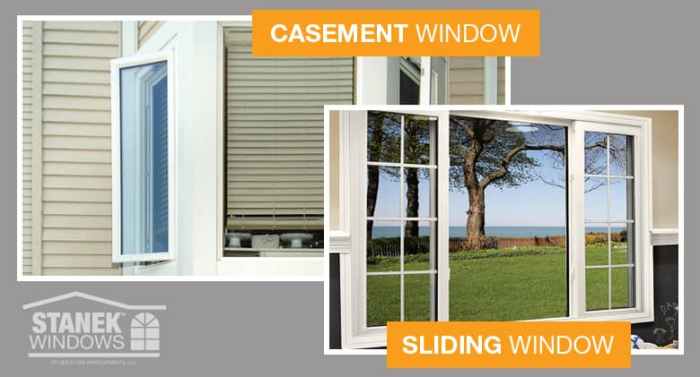
In the world of windows, two popular styles stand out: sliding and casement windows. Both types offer unique functionalities and aesthetics, catering to different needs and preferences in home design. Understanding the key differences between them can significantly influence your choice when upgrading or renovating your home.Sliding windows operate on a horizontal track, allowing one or more panels to slide open.
In contrast, casement windows are hinged on one side and open outward, typically using a crank mechanism.
Key Differences
The distinctions between sliding and casement windows extend beyond just their opening mechanisms. Here’s a breakdown of their advantages and disadvantages:
- Sliding Windows:
- Advantages: They are easy to operate, require less space, and provide an unobstructed view.
- Disadvantages: They may not seal as tightly as casement windows, potentially leading to air leaks.
- Casement Windows:
- Advantages: They offer superior ventilation and energy efficiency due to their tight seal when closed.
- Disadvantages: Their outward opening can be obstructed by external elements, such as shrubs or fences.
When it comes to energy efficiency, casement windows typically outperform sliding ones. The design of casement windows allows them to close tightly against the frame, reducing airflow and improving insulation, which can lead to lower heating and cooling costs.
Design and Aesthetics
Choosing between sliding and casement windows also involves considering how they fit into the overall design of your home. The architectural style plays a crucial role in this decision.
Architectural Compatibility
Sliding windows tend to complement modern and contemporary designs, where clean lines and functionality are prioritized. Casement windows, on the other hand, align well with traditional and cottage-style homes, adding a touch of classic charm.The color and finishing options available for both window types are extensive. Homeowners can choose from various materials like vinyl, aluminum, and wood, allowing for a perfect match with existing decor.
Custom finishes can range from bold colors to subtle stains, offering flexibility to fit any aesthetic preference.
Installation Process
Installing new windows can seem daunting, but understanding the process helps simplify it.
Sliding Windows Installation Guide
1. Measure the Opening
Accurate measurements ensure a snug fit.
2. Prepare the Frame
Remove the old window and clean the frame.
3. Install the Track
Secure the track in the frame with appropriate fasteners.
4. Insert the Window Panels
Place the panels in the track and ensure they slide smoothly.
5. Seal and Finish
Apply weatherstripping and caulk to seal any gaps.
Casement Windows Installation Guide
1. Measure the Opening
Take precise measurements for the casement window.
2. Prepare the Frame
Remove existing window material and clean the area.
3. Install the Window Frame
Secure the frame in place using screws.
4. Attach Hinges
Fix the hinges to the side of the opening.
5. Test the Mechanism
Ensure the crank opens and closes smoothly, then seal the edges.In terms of complexity, sliding windows are generally easier to install due to their straightforward design. Casement windows may require more time due to the need for precise alignment of hinges and cranks.
Home Improvement and Renovation
Replacing old windows with either sliding or casement options can significantly enhance property value and improve energy efficiency.
Choosing the Right Window Type
During a home renovation, it’s essential to consider the following tips when selecting window types:
- Assess the architectural style of your home.
- Evaluate insulation and energy efficiency needs.
- Consider the maintenance requirements of different window types.
For homeowners contemplating window replacement, a checklist can streamline the decision-making process:
- Determine the budget for window replacement.
- Research window energy ratings.
- Consider the aesthetic impact on your home.
- Check local building codes and regulations.
Security Features
Security is a top priority when choosing windows for your home.
Sliding Windows Security
Sliding windows typically come with features like multi-point locking systems, which enhance security. Additionally, tempered glass can provide extra protection against break-ins.
Casement Windows Security
Casement windows generally offer superior security features due to their hook-shaped locks and the fact that they are more difficult to pry open. They can also be fitted with additional security measures such as window sensors and security screens.
Enhancing Window Security
To further boost security for both window types, homeowners can:
- Install window alarms.
- Use security film on glass panes.
- Ensure that all locks are functioning properly and are regularly maintained.
Maintenance and Care
Proper maintenance ensures longevity and optimal performance from both sliding and casement windows.
Sliding Windows Maintenance
Regular maintenance involves:
- Cleaning the tracks and rollers to ensure smooth operation.
- Inspecting seals and weatherstripping for wear and tear.
- Lubricating moving parts annually.
Casement Windows Care
To maintain casement windows effectively:
- Clean the glass and frame regularly.
- Check the crank mechanism for signs of wear.
- Inspect the hinges and lubricate them as necessary.
Common issues faced include difficulty in opening due to debris or wear, which can usually be resolved with cleaning or minor repairs.
Energy Efficiency Considerations
When evaluating window options, energy efficiency is a critical factor.
Energy Efficiency Ratings
Both sliding and casement windows are available with various energy efficiency ratings. Casement windows often have ratings that reflect their superior insulation properties.Sliding windows can impact heating and cooling costs differently based on their construction and sealing mechanisms. Homeowners should look for Energy Star certified products, which indicate better energy performance.
Home Improvement Appliances Compatibility
The choice of windows can affect home improvement appliances, particularly HVAC systems.
Influence of Natural Light
Natural light can significantly impact appliance efficiency. Sliding windows tend to provide larger openings, maximizing natural light but potentially increasing heat gain, whereas casement windows can be more strategically placed to optimize airflow without excessive heat exposure.
Smart Home Technology Integration
Modern homes often integrate smart technology. Both window types can accommodate smart sensors that monitor temperature and energy usage, enhancing overall home efficiency.
Feng Shui and Window Placement
Feng Shui principles emphasize the importance of window placement in promoting positive energy flow within a home.
Energy Flow Impact
Sliding windows may create a more dynamic flow of energy due to their design, while casement windows can provide a more stable and controlled airflow.
Design Tips for Balance
To achieve harmony, consider placing casement windows in rooms requiring calmness, while sliding windows can be utilized in areas meant for activity and movement.
End of Discussion
In conclusion, both sliding and casement windows bring distinct advantages to the table, making them valuable options for any homeowner. Whether your priority lies in energy efficiency, ease of maintenance, or design aesthetics, weighing the pros and cons of each type will guide you toward the best choice for your space. Ultimately, the decision will hinge on your specific requirements and personal style, ensuring that your windows enhance both the functionality and beauty of your home.
Questions Often Asked
What is the main difference between sliding and casement windows?
Sliding windows move horizontally, while casement windows open outward on hinges, providing different ventilation and aesthetic options.
Which window type is more energy-efficient?
Generally, casement windows are considered more energy-efficient because they create a tighter seal when closed, reducing air leaks.
Are sliding or casement windows easier to maintain?
Sliding windows tend to be easier to clean since they do not have protruding handles; however, both types require regular maintenance to ensure longevity.
Can I install sliding windows myself?
Yes, with proper guidance and tools, many homeowners can install sliding windows themselves, though professional installation is recommended for casement windows due to their complexity.
What styles of homes suit casement windows best?
Casement windows complement traditional and contemporary home styles, especially those that emphasize natural light and ventilation.


